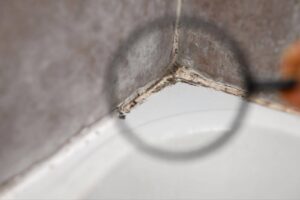

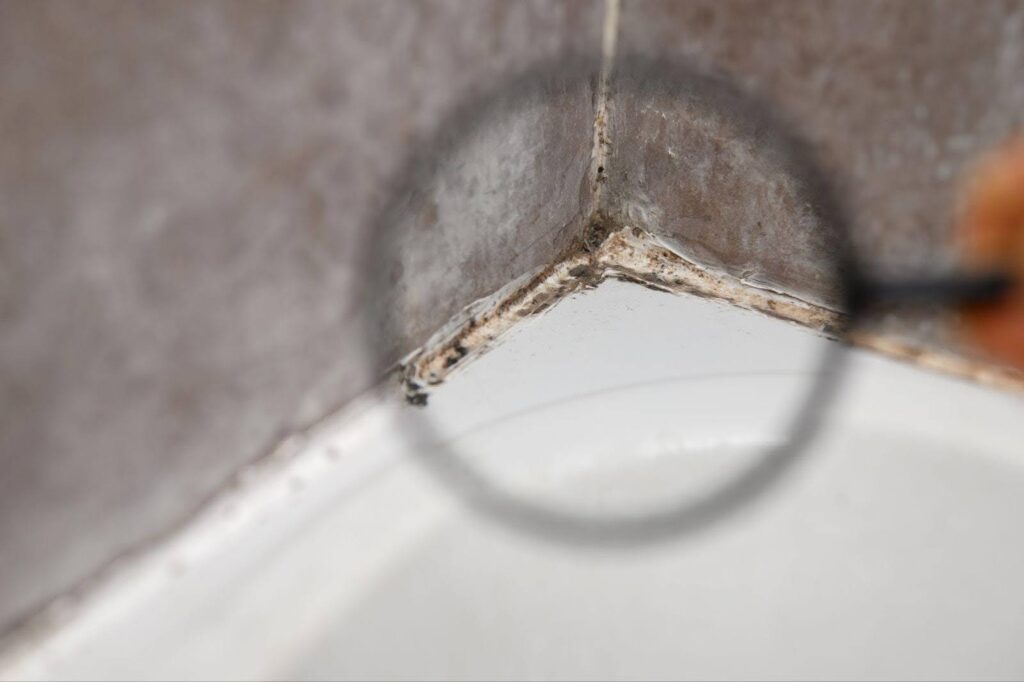
If you’re seeing mold on the shower door edges or on the seal lines, moisture is lingering where the glass, hardware, and corners stay warm and damp. Consistent ventilation and cleaning the glass shower door help, but recurring growth often signals buildup trapped in seals and crevices. Controlling moisture is the most effective long-term fix.
Why does mold keep coming back on the shower glass?
How clear are your shower doors, really? Many people don’t realize that glass is a porous material, and your shower doors didn’t necessarily come with a sealant to keep scum, bacteria, and fungus out. Mold thrives in wet, warm, and dark places, making the corners and rims of shower doors ideal breeding grounds. If you’re seeing mold on the shower door or mold on the shower door seal lines, you’re not alone.
In this guide, you’ll learn why mold keeps coming back, what glass shower door cleaning actually accomplishes, and the practical steps that help you prevent regrowth instead of fighting the same spots every week.
What causes mold on shower glass and seals
No mold that’s allowed to grow on or in your shower doors is “good mold.” It’s a problem no matter what the color. Mold is a symptom of moisture, and the way to control indoor mold growth is to control moisture.
Bathrooms are a perfect environment for growth because they’re warm and damp, and they often stay humid long after a shower ends. That combination makes the corners, rims, and lower edges of shower doors ideal breeding grounds. This is why mold on the shower door shows up even when the center of the glass looks clean.
The seal line is another common hot spot. Water runs down the door and collects at the bottom, then sits in tight spaces where airflow is limited. If you wipe the glass but skip the seal, mold on the shower door seal areas reappears quickly because moisture stays trapped.
You can’t scrub your way out of a moisture problem. Drying and airflow prevent regrowth better than any single product.
Step-by-step: How to prevent mold from returning
“Getting rid of mold” is easier said than done, but preventing regrowth is realistic when you focus on moisture control first. Here’s what helps most:
1. Vent the humidity after every shower
Run the fan and leave the door cracked open to let moisture escape. The EPA’s mold guidance emphasizes moisture control as the key to prevention.
2. Dry the glass and the bottom edge daily
Use a squeegee, then wipe the bottom edge where water pools. This step is especially important if you’ve battled mold on shower door seal lines before.
3. Do weekly glass shower door cleaning with extra focus on corners
Weekly glass shower door cleaning should include corners, tracks, hinge areas, and the bottom sweep. Mold rarely starts in the middle of the glass.
4. Scrub seal lines directly
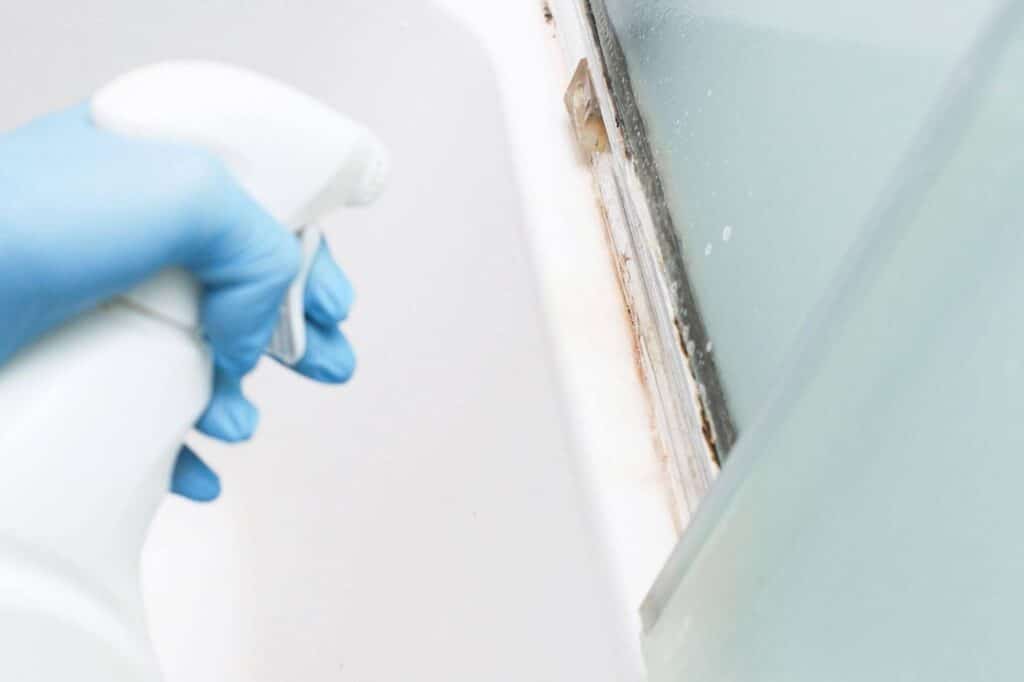
Use a soft brush or cloth along the seal and lower rim. If you skip this, the mold on the shower door seal keeps returning.
5. Reduce soap scum and residue
Residue traps moisture and gives mold more to cling to. The cleaner the surface, the harder it is for growth to take hold.
6. Inspect sweeps, caulk, and seals for wear
Worn sweeps and gaps trap moisture and grime. Replacing worn parts often solves recurring mold on the shower door problems better than changing cleaners.
7. Consider protective sealants or coatings when appropriate
A sealant serves as a long-term solution by creating a barrier that helps reduce buildup and makes residue less likely to stick.
Common reasons shower door mold keeps returning
The “looks clean, isn’t clean” shower
Many showers look clear, but growth starts where you don’t look. Corners, tracks, and the bottom edge stay damp longer, which is why mold forms on shower door corners even when the glass looks fine.
The “I clean it, and it comes right back” seal line
This is often trapped moisture. You wipe the glass, it shines, and then the dark line returns at the bottom. If you don’t dry and scrub the seal, mold on the shower door seal will reappear quickly.
The busy household
When multiple showers happen daily, humidity stays elevated longer. A daily squeegee and consistent ventilation reduce the frequency of heavy glass shower door cleaning sessions.
Older doors
Older doors often have more seams and worn sweeps. If you’re constantly fighting regrowth, replacing worn seals or upgrading the door may be the most practical fix.
Benefits of solving mold at the source
- Reduces recurring mold on the shower door and the wipe-and-return cycle
- Helps keep seals and hardware cleaner and longer-lasting
- Improves bathroom hygiene and comfort
- Reduces staining near the bottom edge and mold on the shower door seal areas
- Keeps the bathroom feeling more like a spa retreat — clean, calm, and inviting
Common mistakes to avoid
Many people assume bleach is the answer, but the EPA doesn’t recommend bleach as a routine practice during mold cleanup. Even when bleach appears to work, moisture control remains the real solution.
Other common missteps include:
- Only cleaning the center of the glass and skipping corners and tracks
- Skipping daily drying, which allows the mold on the shower door seal to regrow quickly
- Using harsh chemicals without rinsing fully increases irritation risk
- Ignoring ventilation and leaving humidity trapped
- Waiting too long to replace worn sweeps or caulk that traps moisture
Data and research insights
- The EPA says there’s no practical way to eliminate all mold, and the way to control indoor mold growth is to control moisture.
- The CDC notes that mold exposure can trigger allergy symptoms and irritation, even in people who aren’t allergic.
- The EPA mold guide notes that when bathroom mold reappears, increasing ventilation and cleaning frequency helps keep it to a minimum.
Tools and products
A simple toolkit is enough, but consistency matters:
- Squeegee for daily drying
- Microfiber cloths for corners and hardware
- Non-abrasive cleaner for weekly glass shower door cleaning
- Soft brush for tracks and seal lines
- Seal-safe cleaner for problem areas
- Replacement sweep or seal kit if mold on the shower door seal keeps returning
- A working bathroom fan, plus the habit of using it long enough to clear the humidity
FAQ
Why does mold on the shower door corners keep coming back?
Corners stay wet longer and get less airflow. If you wipe the glass but skip the corners and the bottom edge, moisture and residue remain. Daily drying, better ventilation, and targeted cleaning prevent most recurring growth.
What causes mold on the shower door seal lines even after cleaning?
Seal lines trap moisture and soap residue. If the seal is worn or pulling away, it holds water even longer. Scrub the seal line directly, dry it daily, and replace worn sweeps if the problem persists.
How often should a glass shower door be cleaned?
Do a quick daily dry-down and a weekly clean for best results. The EPA mold guide notes that when bathroom mold reappears, increasing ventilation and cleaning frequency helps keep it to a minimum.
Does bleach permanently remove shower mold?
Bleach may temporarily reduce surface growth, but the EPA does not recommend it as a routine practice during mold cleanup. Focus on moisture control, ventilation, drying, and cleaning where water sits.
When should I replace seals or consider new shower doors?
Replace seals when they tear, warp, or trap grime that won’t come out. Consider new doors if mold returns constantly despite good ventilation and consistent cleaning, especially if the door has worn components or older design creases that collect moisture.
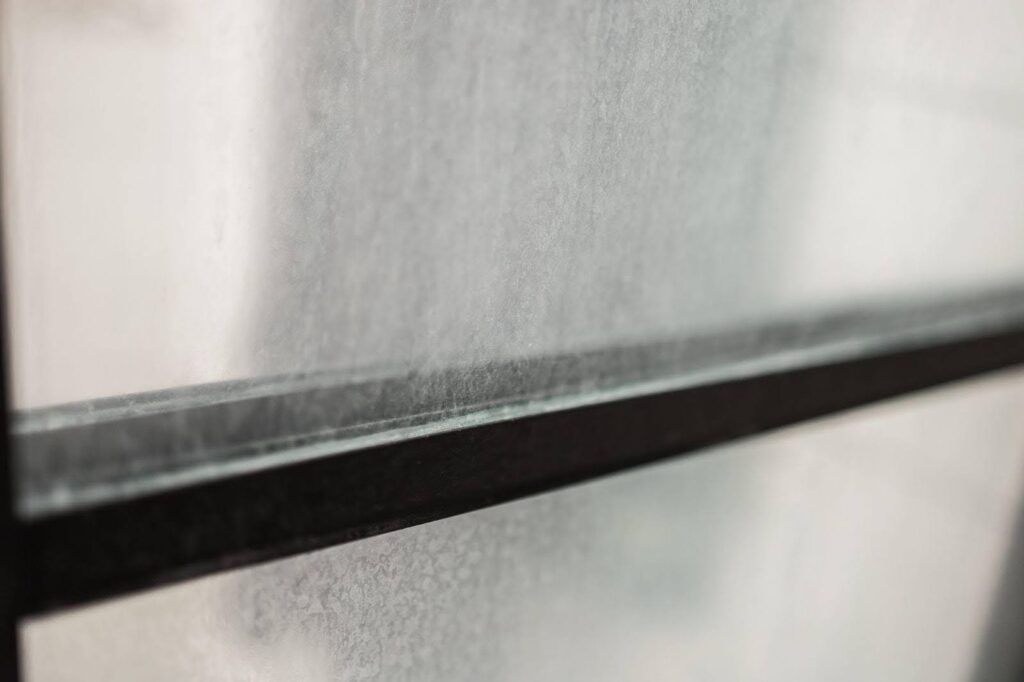
Keep shower mold under control with help from Murray Glass
Shower mold is frustrating, but it’s also predictable. Control moisture, dry the door daily, and clean corners, track, and seals weekly.
If you keep seeing mold on the shower door growth or persistent mold on the shower door seal buildup, Murray Glass can help with seal replacement or new shower door options that make maintenance easier. Contact Murray Glass to keep your bathroom cleaner and healthier.